HEALTH & LIFE SCIENCES
Study Medicine Overseas
Explore medical degrees, study pathways and university options in the UK and Australia. Discover how medicine combines scientific knowledge, clinical skills and compassionate care to understand illness and support patients’ health.
What is Medicine?
Medicine is the study and practice of preventing, diagnosing and treating illness and injury. It combines knowledge of the human body and disease with clinical skills, scientific evidence and professional judgement. Doctors work with patients and other healthcare professionals to understand health concerns, consider treatment options and provide care that respects each person’s needs and preferences.
Medical education builds a foundation in subjects such as anatomy, physiology, biochemistry, pathology, microbiology and pharmacology. Students explore how the body functions, how diseases develop and how treatments affect different body systems. They learn to connect scientific principles with symptoms, examination findings and the results of investigations.
Clinical learning develops skills in taking patient histories, performing physical examinations and reasoning through possible diagnoses. Students learn how investigations can help answer clinical questions and how to consider the benefits, risks and limitations of treatment. Recognising uncertainty, seeking supervision and identifying when urgent action is needed are essential parts of this training.
Communication and professionalism are central to medicine. Students practise explaining information clearly, obtaining informed consent, protecting confidentiality and involving patients in decisions. They also explore medical ethics, health inequalities, disease prevention and the wider social factors that influence health, while developing the ability to work effectively within healthcare teams.
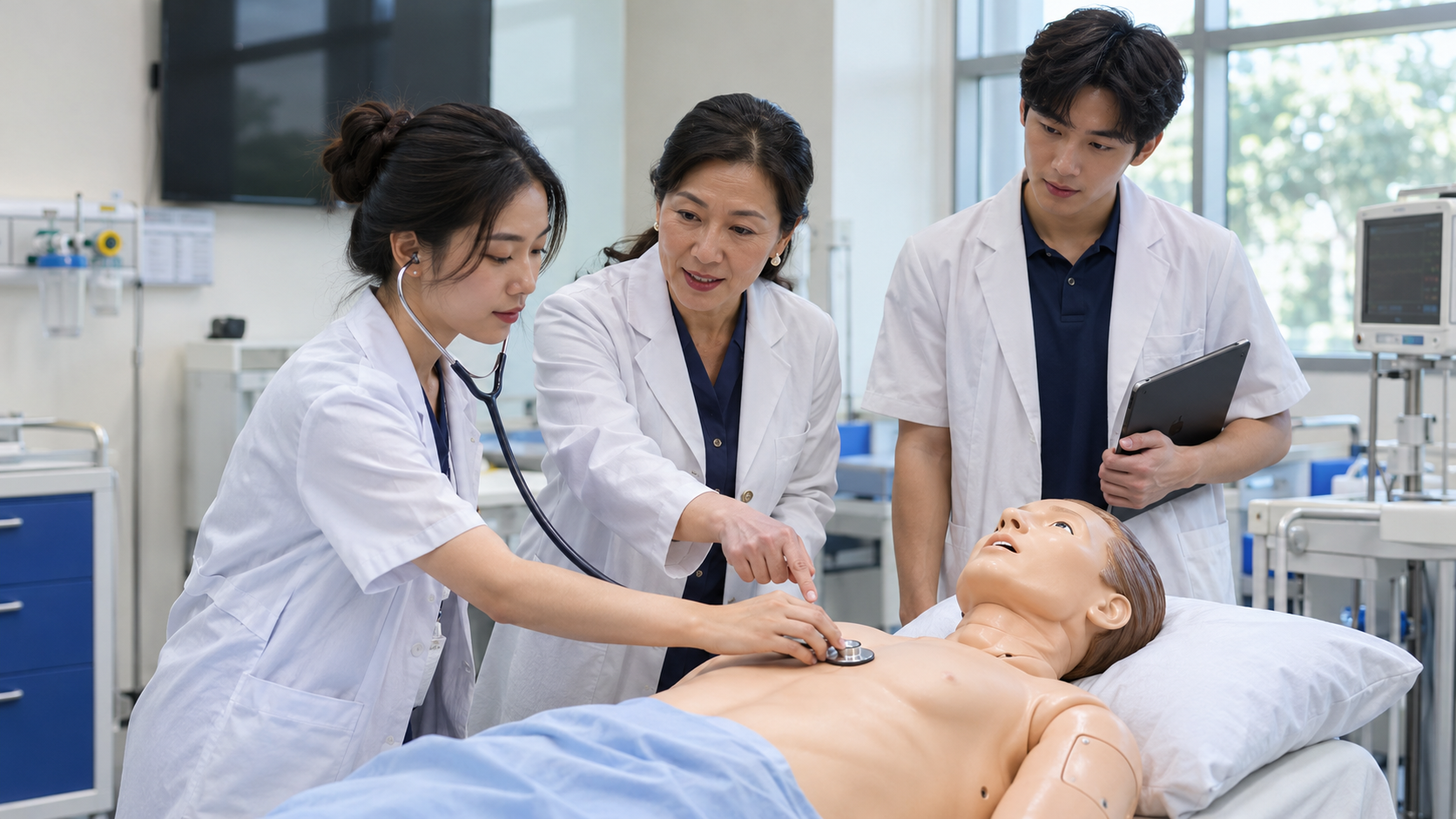
Practical training combines classroom learning, clinical skills sessions, simulation and supervised experience in healthcare settings. Depending on the programme, students gain exposure to areas such as general medicine, surgery, primary care, child health, mental health and women’s health. Research projects and critical appraisal help them evaluate evidence and understand how medical knowledge develops.
Medical degrees may admit students after pre-university qualifications or after a previous bachelor’s degree, depending on the university. Completing a medical degree is one stage of becoming a practising doctor: graduates must also meet the relevant requirements for registration and supervised postgraduate training. Before enrolling, check the exact qualification, awarding medical school, campus and recognition requirements for the country where you intend to practise.
What Will You Study?
Human Biology & Disease
Build a foundation in anatomy, physiology, biochemistry and genetics. Explore pathology, microbiology and immunology to understand how diseases develop and affect the body. Connect scientific knowledge with symptoms, clinical findings and the principles underlying prevention and treatment.
Clinical Assessment & Treatment Principles
Develop skills in taking patient histories, performing physical examinations and considering possible diagnoses. Learn to interpret investigations and evaluate treatment options, including medicines and other interventions. Explore safe prescribing principles, clinical reasoning and recognising situations that require urgent attention or specialist advice.
Communication, Ethics & Medical Research
Practise explaining information clearly, discussing treatment choices and respecting patients’ preferences. Study consent, confidentiality, professional responsibilities and public health. Develop research, statistics and critical appraisal skills to evaluate scientific evidence and understand its application to patient care.
Clinical Skills & Supervised Placements
Apply your learning through clinical skills sessions, simulation and supervised placements. Gain experience in areas such as general medicine, surgery, primary care, child health and mental health. Build teamwork and professional judgement while learning to work within your competence and seek appropriate supervision.
These are typical study areas for primary medical qualifications. Course structure, specialist exposure, research opportunities and clinical placements vary by university and programme. Graduates must meet the relevant registration and postgraduate training requirements before progressing in medical practice.
Entry Requirements & Study Pathways
Entry to medicine is competitive. Your options depend on your academic qualifications, science subjects and the medical school’s selection requirements. Check whether the programme accepts international applicants and offers direct entry, provisional entry or graduate entry.
| Your Qualification | Possible Study Pathway |
|---|---|
| Singapore O Levels | Further study through A Levels, the IB Diploma or a specifically accepted foundation programme may help you meet medical school entry requirements. Confirm acceptance directly with the intended medical school before choosing a pathway. A general science foundation does not automatically provide access to medicine, and progression may require further selection. |
| Singapore A Levels / IB Diploma | You may apply for direct-entry medicine or a school-leaver provisional pathway where available. Medical schools typically expect strong academic results and may specify chemistry, biology or other subjects. Selection may also involve an admissions test and interview. Meeting minimum requirements does not guarantee an interview or offer. |
| Polytechnic Diploma | Acceptance of Singapore polytechnic diplomas varies between medical schools. Check whether your exact diploma is accepted, which prerequisite subjects are required and whether previous tertiary study affects eligibility for school-leaver entry. A related health or science diploma should not be assumed to provide advanced entry or credit towards medicine. |
| Bachelor’s Degree | Graduate-entry medical programmes may be available to applicants with a previous degree. Requirements vary and can include a minimum GPA, specified prerequisite subjects, an admissions test and an interview. Some accept a range of degree disciplines, while others restrict eligible backgrounds. A biomedical science degree does not automatically lead to medicine. |
Additional Admission Requirements
Check the admissions test, English language, reference, interview and application deadline requirements for your exact course and intake. Tests and selection processes can differ for international applicants. Health screening, vaccination evidence and background checks may be required for clinical training. Before enrolling, also check the exact medical qualification and campus against the registration requirements of your intended country of practice.
Featured Universities
Explore selected medical degrees in the UK and Australia. Compare academic requirements, admissions tests, interviews and clinical training, and check the exact qualification against Singapore Medical Council requirements before enrolling.
United Kingdom
Newcastle University
Medicine and Surgery MB BS
Study medicine through Newcastle’s UK programme, combining medical sciences with clinical skills and supervised experience in healthcare settings. Develop knowledge through clinical rotations, placements and preparation for medical practice. Check the current academic, UCAT and interview requirements for international applicants.
University of Sheffield
Medicine MBChB
Explore Sheffield’s five-year medical programme, developing scientific understanding, clinical skills and experience learning from patients. Prepare for the responsibilities of medical practice through academic and clinical learning. International applicants should review the course’s subject requirements, UCAT selection process and interview criteria.
Australia

Monash University
Bachelor of Medical Science and Doctor of Medicine
Explore Monash’s five-year direct-entry medical programme in Australia, combining medical sciences with clinical education. School-leaver eligibility includes restrictions on how recently applicants completed pre-university studies and whether they have commenced tertiary study. Check the international admissions test and interview requirements for your intended intake.
Adelaide University
Bachelor of Medical Studies / Doctor of Medicine
Begin with the Bachelor of Medical Studies before progressing to the Doctor of Medicine, subject to the university’s progression requirements. Develop medical knowledge and clinical skills through learning in Adelaide’s healthcare and research environment. The Bachelor of Medical Studies alone is not the completed professional medical qualification.
Singapore Medical Council Recognition
The current Second Schedule of Singapore’s Medical Registration Act lists medical qualifications from Newcastle University, the University of Sheffield, Monash University and Adelaide University. Recognition relates to the specified awarding medical school and qualification.
A listed qualification does not automatically grant Singapore registration. Before enrolling, check the exact programme, campus, final qualification and any clinical training arrangements against SMC’s current guidance. Applicants must also meet the prevailing registration requirements and applicable national licensing conditions.
View SMC Qualifications & Guidance ↗Looking for Other University Options?
These are selected examples. We can help you compare medical schools and application requirements based on your qualifications, academic background and intended country of practice.
Discuss Your Study OptionsMedicine admission is competitive. Meeting minimum requirements does not guarantee an interview or offer. Course structures, selection processes, professional recognition and postgraduate training opportunities may change.

Professional Registration in Singapore
If you plan to practise medicine in Singapore after studying overseas, check the Singapore Medical Council’s (SMC) requirements before choosing your programme. Doctors must hold SMC registration and a valid Practising Certificate before practising.
Overseas Medical Qualifications & SMC Requirements
For students choosing an overseas medical degree, check the exact university, medical school and qualification against the Second Schedule of Singapore’s Medical Registration Act. Read SMC’s accompanying important notes, including any conditions relevant to your programme.
A listed qualification does not automatically grant registration, employment or permission to practise independently. Applicants must satisfy SMC’s prevailing requirements for the registration category that applies to their training and experience.
Graduates seeking to undertake Postgraduate Year 1 (PGY1) training in Singapore should review the provisional registration route. Applications must be submitted through an eligible local employer, and PGY1 training must begin within two years of graduation.
Doctors who have completed internship or housemanship should review the conditional registration requirements. These include an acceptable qualification, employment in an SMC-approved healthcare institution, satisfactory internship training, recent clinical practice and professional good standing. Conditional registration involves supervised practice.
Check any national licensing examination requirements that apply in the country awarding your medical degree. For programmes involving partner institutions or twinning arrangements, confirm that the clinical training, final examinations and awarding arrangements meet SMC’s requirements.
Before enrolling, seek clarification from SMC if the course title, university name, campus or training arrangements differ from the published information. Provide the exact qualification and intended intake, and check the latest guidance again before returning to Singapore.
Career Opportunities
Medicine can lead to careers in patient care, research, education and healthcare leadership. After graduating, doctors continue through supervised clinical training and meet the registration requirements of their intended country of practice. Career progression depends on clinical experience, further qualifications and selection into relevant training programmes.
Hospital Medicine
Assess and care for patients with illnesses, injuries or other medical needs in hospital settings. Work within clinical teams to investigate symptoms, plan treatment and monitor recovery. Early postgraduate roles involve supervised practice, with responsibilities developing as doctors gain experience and demonstrate competence.
Primary Care & Family Medicine
Provide care for people with a wide range of health concerns through community and primary care services. Work may include managing common illnesses, supporting long-term conditions, preventive care and coordinating referrals. Further training can support a career in family medicine and ongoing care across different stages of life.
Specialist Medical & Surgical Practice
Following selection into specialist training, develop expertise in fields such as internal medicine, surgery, paediatrics, psychiatry, anaesthesiology or obstetrics and gynaecology. Specialist careers require substantial postgraduate training, assessments and the relevant professional recognition. Entry into a preferred specialty is competitive and is not guaranteed by completing a medical degree.
Public Health & Population Health
Contribute to preventing disease and improving health across communities. Depending on your training and role, work may involve analysing health trends, evaluating screening programmes, supporting outbreak responses or developing health policy. Public health and specialist population health positions may require additional qualifications and professional training.
Medical Research & Education
Help investigate diseases, evaluate treatments and improve clinical practice through research. With relevant experience, contribute to teaching medical students and healthcare professionals. Academic careers may combine clinical work, research and education, with postgraduate research degrees or teaching qualifications needed for some positions.
Healthcare Leadership & Medical Innovation
With suitable experience and additional skills, explore opportunities in clinical leadership, patient safety, service improvement or medical technology. Apply clinical understanding to improving care processes, evaluating healthcare solutions and supporting multidisciplinary teams. Roles may require further expertise in management, data analysis, regulation or product development.
These are examples of career directions rather than guaranteed outcomes. A medical degree alone does not qualify a graduate for independent or specialist practice. Registration, internship, postgraduate training and specialist recognition requirements vary by country. Check the requirements for your intended career and country of practice.
Let’s plan your next step
Tell us about your qualifications and medicine study goals.
Enquire about studying medicine →
Entry requirements and available pathways vary by institution and course.