HEALTH & LIFE SCIENCES

Study Neuroscience Overseas

Explore neuroscience degrees, study pathways and university options in the UK and Australia. Discover how the brain and nervous system influence sensation, movement, learning, memory and behaviour.

What is Neuroscience?

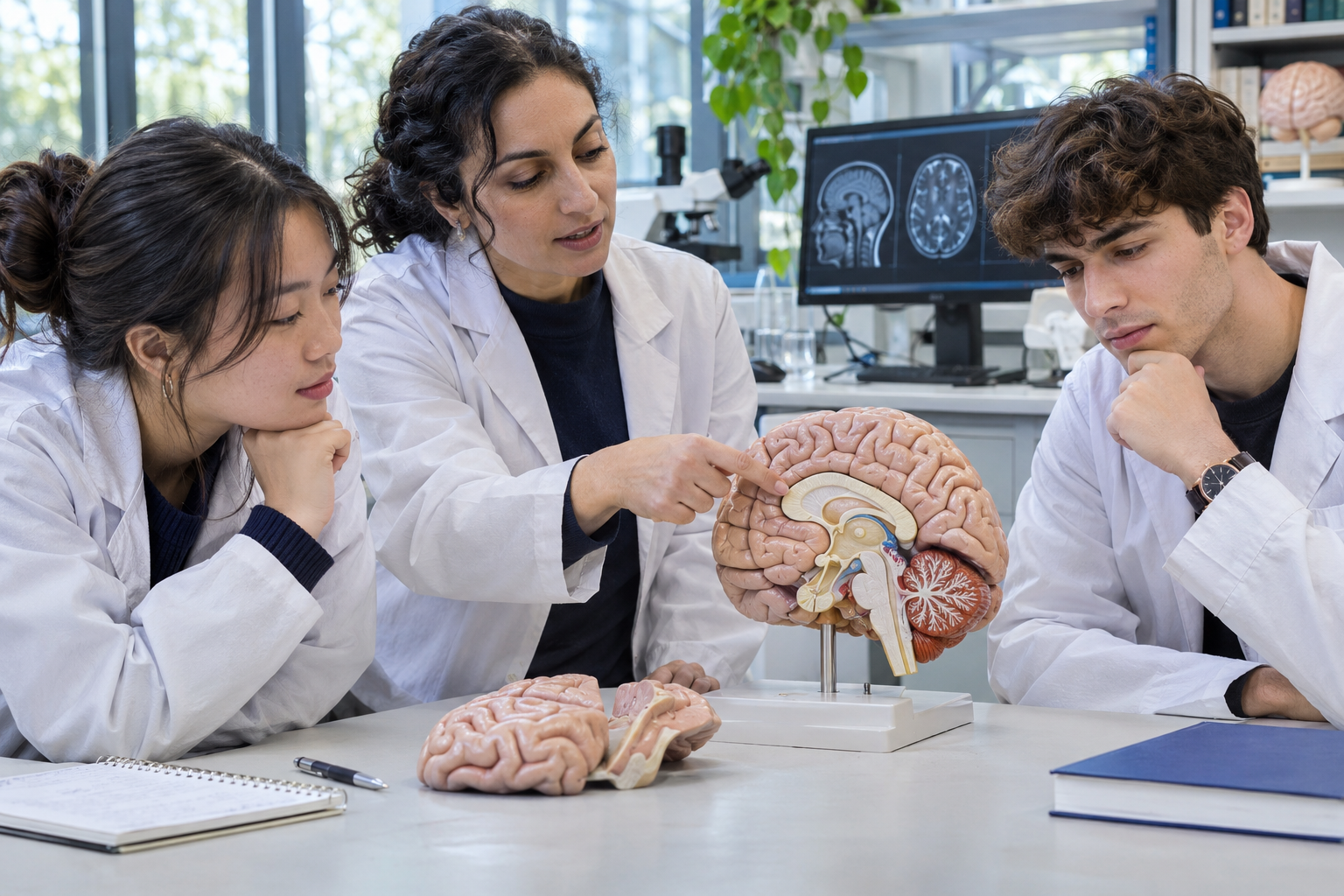
Neuroscience is the scientific study of the brain and nervous system. It investigates how nerve cells function, how they communicate and how networks of cells support sensation, movement, learning, memory and behaviour. The field brings together biology, chemistry, psychology and computational approaches to understand the nervous system in health and disease.

Students explore the nervous system at different levels, from genes and molecules to cells, circuits and behaviour. They study neurons and supporting cells, electrical signalling and the chemical messengers that help cells communicate. Anatomy and physiology provide a foundation for understanding how the brain, spinal cord and peripheral nerves work together.

The subject examines how the nervous system processes information and guides responses. Depending on the programme, students may investigate perception, attention, emotion, sleep, decision-making and the control of movement. They also explore how experience and development influence neural connections, helping explain how people learn and adapt.

Neuroscience also investigates what happens when nervous system function is disrupted. Students may study mechanisms associated with neurological and mental health conditions, considering evidence from genetics, cellular research and behavioural studies. Pharmacology can help explain how medicines affect neural signalling and how potential treatments are investigated.

Practical learning develops skills in experimental design, data analysis and evaluating scientific evidence. Activities may include microscopy, behavioural experiments, analysing brain recordings or working with imaging datasets, depending on the course. Students learn about research ethics, the limitations of different methods and how to communicate findings clearly through reports, projects and presentations.

Neuroscience degrees can support pathways into research, biotechnology, pharmaceuticals and related scientific or data-focused work, depending on your training and further experience. Programmes vary in their emphasis on cellular biology, cognition, behaviour and computational methods. A neuroscience degree does not qualify graduates as neurologists, psychiatrists or clinical psychologists; these careers require separate professional education and training. Compare the exact subjects, practical learning and research opportunities before choosing your course.

What Will You Study?

Neuroanatomy & Neural Signalling

Study the organisation of the brain, spinal cord and peripheral nervous system. Explore how neurons and supporting cells function, how electrical signals travel and how chemical messengers enable communication between cells. Connect cellular processes with the activity of neural circuits and body systems.

Cognition, Behaviour & Sensory Systems

Explore how the nervous system supports perception, movement, learning, memory and behaviour. Depending on the programme, investigate attention, emotion, sleep and decision-making. Examine how researchers connect observations of behaviour with evidence about brain activity and neural mechanisms.

Development, Plasticity & Nervous System Disorders

Investigate how the nervous system develops and how neural connections change with experience, ageing or injury. Explore biological mechanisms associated with neurological and mental health conditions. Study how medicines influence neural signalling and how experimental evidence helps researchers investigate potential treatments.

Experimental Methods & Neuroscience Research

Develop skills in experimental design, statistics and interpreting scientific data. Depending on the course, practical learning may involve microscopy, behavioural experiments, neural recordings or brain imaging datasets. Explore research ethics, evaluate the limitations of different methods and communicate findings through projects, reports and presentations.

These are typical study areas. The balance of cellular, cognitive, behavioural and computational neuroscience varies by university and programme. Practical techniques, research projects and placement opportunities also differ. A neuroscience degree does not provide the professional qualification required to practise as a neurologist, psychiatrist or clinical psychologist.

Entry Requirements & Study Pathways

Your pathway into neuroscience depends on your academic qualifications, subject background and the requirements of your chosen university. Compare programmes covering cellular neuroscience, cognition, behaviour and computational methods, and check whether neuroscience is offered as a standalone degree or a major within a broader science programme.

Your Qualification Possible Study Pathway
Singapore O Levels Further study through A Levels, the IB Diploma or an accepted foundation or diploma programme may help you meet undergraduate entry requirements. Confirm that your chosen pathway is accepted for the intended degree and includes the required science and mathematics subjects. Where neuroscience is a major, check any additional prerequisites for selecting it.
Singapore A Levels / IB Diploma You may be eligible for direct entry into a neuroscience degree or a broader degree offering a neuroscience major, depending on your results and subject combination. Check requirements for biology, chemistry, mathematics or other accepted subjects. Courses combining neuroscience with psychology or computing may have different prerequisites.
Polytechnic Diploma Your application will be assessed against the university’s requirements, including your diploma discipline, GPA and relevant modules. Provide details of biology, physiology, chemistry, psychology, statistics, programming or laboratory studies where relevant. Credit transfer and advanced entry are assessed individually and are not automatic. Check how exemptions affect prerequisite sequences and access to neuroscience subjects.
Bachelor’s Degree Graduates can explore postgraduate neuroscience programmes, subject to academic results, prerequisite subjects and research experience. Eligible backgrounds vary and may include biological sciences, psychology, medicine, engineering or computing. Compare taught and research options in areas such as cellular, cognitive or computational neuroscience. Research degrees may require honours or equivalent research preparation.

Additional Admission Requirements

Depending on the programme, you may need specific subjects, evidence of English language proficiency, references or a personal statement. Postgraduate applications may require module descriptions, evidence of research experience, a research proposal or an available supervisor. Check international student eligibility, application deadlines and any conditions for projects or placements. A neuroscience degree does not qualify you as a doctor or clinical psychologist, or guarantee admission to their professional training programmes.

Featured Universities

Explore neuroscience study options in the UK and Australia. Compare each programme’s emphasis on the biology of the nervous system, cognition, behaviour and research methods. Some universities offer a standalone neuroscience degree, while others offer neuroscience as a major within a broader qualification.

United Kingdom

Illustration of the University of Nottingham campus entrance

University of Nottingham

BSc (Hons) Neuroscience

Consider a standalone neuroscience degree at an established research university. Explore how the nervous system functions and develop scientific knowledge relevant to understanding the brain, behaviour and disease. Compare the course’s laboratory learning, specialist subjects and research opportunities with your interests.
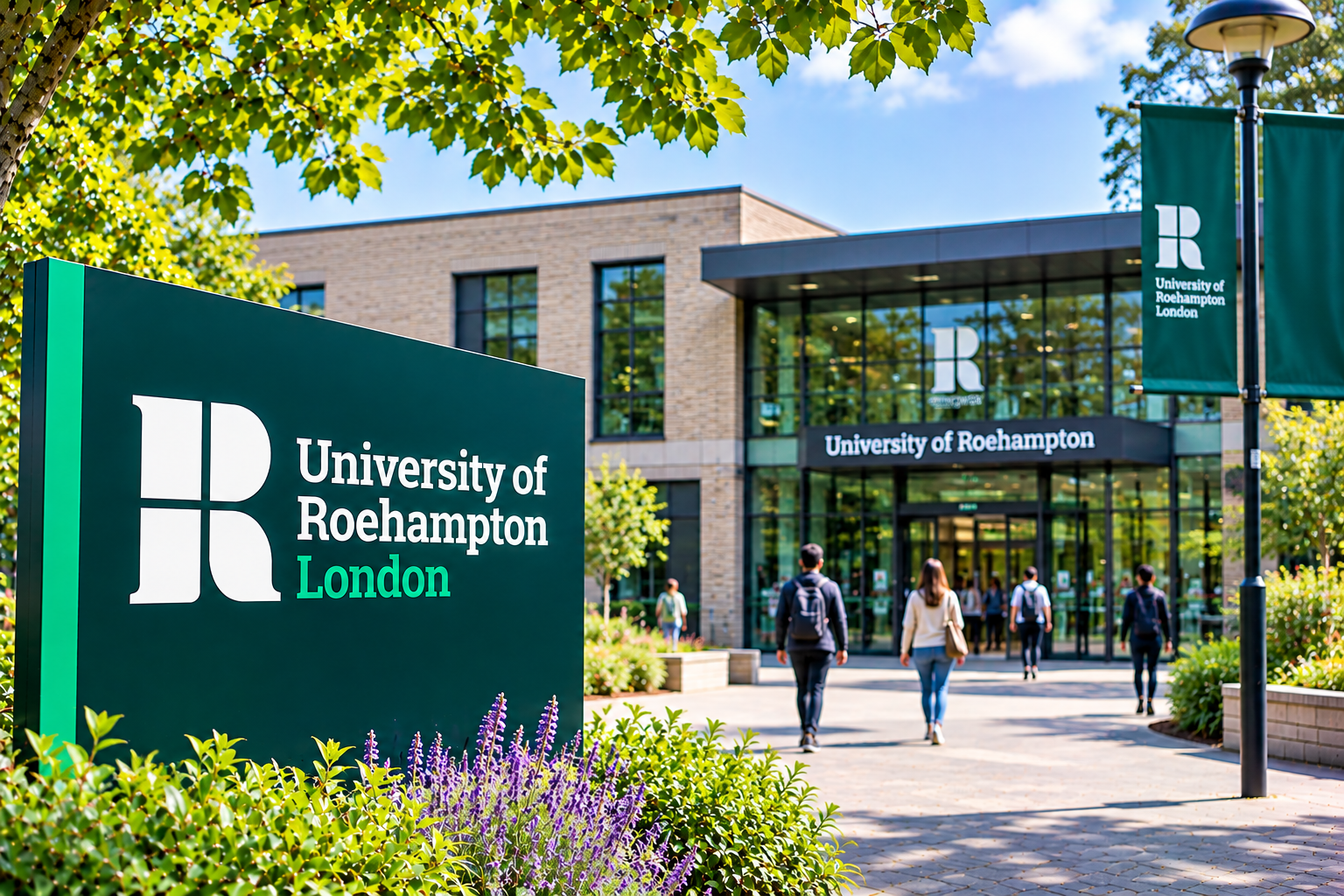
Illustration of the University of Roehampton campus entrance

University of Roehampton

BSc (Hons) Neuroscience

Explore a modern university option in London offering a standalone neuroscience degree. Study the nervous system from molecular and cellular processes through to cognition and behaviour, developing an understanding of how biological mechanisms relate to neurological health and scientific research.

Australia

Illustration of the UNSW Sydney campus entrance

UNSW Sydney

Bachelor of Science — Neuroscience Major

Study the biological and behavioural aspects of the nervous system through a neuroscience major within the Bachelor of Science. Teaching draws on the School of Biomedical Sciences and the School of Psychology. Neuroscience is also available within the Bachelor of Advanced Science (Honours).

Illustration of the Swinburne University of Technology campus entrance

Swinburne University of Technology

Bachelor of Health Science — Neuroscience Major

Consider a modern university option connecting biology and physiology with psychophysiology and neuroimaging. Study neuroscience within a broader health science degree, exploring how the brain and nervous system relate to human function while developing scientific and analytical skills.

Subjects, entry requirements, research projects and placement opportunities vary by programme. Australian options shown here are neuroscience majors within broader degrees. Campus images are illustrative. A neuroscience degree does not qualify graduates as neurologists, psychiatrists or clinical psychologists; these careers require separate professional education and training.

Looking for Other University Options?

These are selected examples. We can help you compare neuroscience study options based on your qualifications, scientific interests, preferred destination and future goals.

Discuss Your Study Options

Working in Singapore

If you plan to work in Singapore after studying neuroscience overseas, compare your chosen programme with the qualifications, research skills and experience required for your intended role. Laboratory research, human participant studies, data analysis and industry positions can require different combinations of expertise.

Qualifications & Employment Requirements

Employers assess neuroscience graduates against the requirements of individual positions. Relevant modules, research projects, practical techniques and experience analysing scientific data can all influence your suitability. A degree title alone does not establish eligibility for every neuroscience-related role.

Singapore’s neuroscience research includes work at universities, A*STAR research institutes and the National Neuroscience Institute (NNI). Research areas include nervous system function, neurological disease, cognition and mental health. Scientific research positions have different entry requirements from clinical roles providing diagnosis or treatment.

For laboratory research, look for opportunities to develop relevant skills in cellular and molecular biology, microscopy, experimental design and laboratory documentation. The techniques needed depend on the project: some investigate cells and biological mechanisms, while others focus on behaviour or neural activity.

For cognitive, imaging or computational research, compare training in statistics, programming, experimental tasks and analysing neuroscience datasets. Experience with tools such as Python, R or MATLAB may be useful where specified by employers. Specialist imaging and recording methods can require additional supervised training.

Check whether a position requires a bachelor’s degree, honours, a master’s degree or a PhD, alongside relevant practical experience. Research assistant and project support positions may provide an early career route, while independent research and academic careers generally require substantial further research training.

A neuroscience degree does not qualify you to practise as a neurologist, psychiatrist or clinical psychologist. These careers require separate professional education and training. Likewise, a neuroscience major should not be assumed to provide a professional psychology qualification or eligibility for a clinical diagnostic role.

Before choosing your course, review current vacancies and compare the specialist subjects, research opportunities and practical training available. Relevant projects and internships can help demonstrate your skills. Overseas course accreditation does not guarantee employment or replace the requirements of an individual employer.

Career Opportunities

Neuroscience graduates can explore research, laboratory, data and scientific support roles that contribute to understanding the brain and nervous system. Opportunities depend on your specialist subjects, practical and computational skills, research experience and any further qualifications required by employers.

Neuroscience Research

Support investigations into neural signalling, brain development, behaviour or nervous system disorders. Work may involve preparing experiments, collecting measurements, analysing results and maintaining research records. Independent scientist and academic positions generally require a PhD and substantial specialist research experience.

Biotechnology & Pharmaceutical Research

Apply relevant biological knowledge within teams investigating potential treatments or developing research tools. Depending on your training, contribute to cell-based experiments, assay development or studies of drug effects on neural systems. Roles may require additional expertise in molecular biology, pharmacology or laboratory techniques.

Cognitive & Behavioural Research

Help investigate processes such as attention, perception, learning and memory. Research support work may include coordinating participant sessions, administering experimental tasks and analysing behavioural data under approved protocols. These roles require careful communication, research ethics and appropriate training for the methods involved.

Neuroscience Data & Computational Analysis

With suitable computational training, help analyse behavioural measurements, brain recordings or imaging datasets. Use statistics, programming and specialist software to identify patterns and support scientific investigations. Advanced modelling and neuroinformatics roles may require postgraduate study and substantial additional technical skills.

Clinical Research & Study Coordination

Support studies investigating neurological conditions or evaluating healthcare interventions. Responsibilities may include coordinating appointments, maintaining study documentation and managing research data. Work involving participants requires appropriate supervision and training; clinical assessments and treatment decisions remain the responsibility of suitably qualified professionals.

Scientific Communication & Technical Support

Combine scientific understanding with communication skills to explain neuroscience research, laboratory methods or specialist products. Opportunities may include scientific writing, public engagement, product applications or customer training. Employers may require additional writing experience, commercial knowledge or expertise with particular instruments and software.

These are examples of career directions rather than guaranteed outcomes. Some roles require specialist training, relevant experience or postgraduate qualifications. A neuroscience degree does not qualify graduates as neurologists, psychiatrists or clinical psychologists, or automatically establish eligibility for clinical diagnostic roles. These careers have separate education, training and professional requirements.

Let’s plan your next step

Tell us about your qualifications and neuroscience study goals.


Enquire about studying neuroscience →

Entry requirements and available pathways vary by institution and course.