HEALTH & LIFE SCIENCES
Study Radiation Therapy Overseas
Explore radiation therapy degrees, study pathways and university options in the UK and Australia. Discover how radiation science, treatment planning, technology and compassionate patient care come together in cancer treatment.
What is Radiation Therapy?
Radiation therapy, also called radiotherapy, is a healthcare field that uses ionising radiation to treat disease, particularly cancer. It combines radiation science, precise technology and compassionate patient care. Radiation therapists work within specialist teams to plan and deliver prescribed treatment accurately, while supporting patients throughout their care.
Students build a foundation in anatomy, physiology, cancer biology and radiation physics. They explore how radiation affects cells and tissues, and why treatment must balance its effects on a tumour with the need to protect surrounding healthy structures. This knowledge supports an understanding of treatment techniques, dose delivery and patient safety.
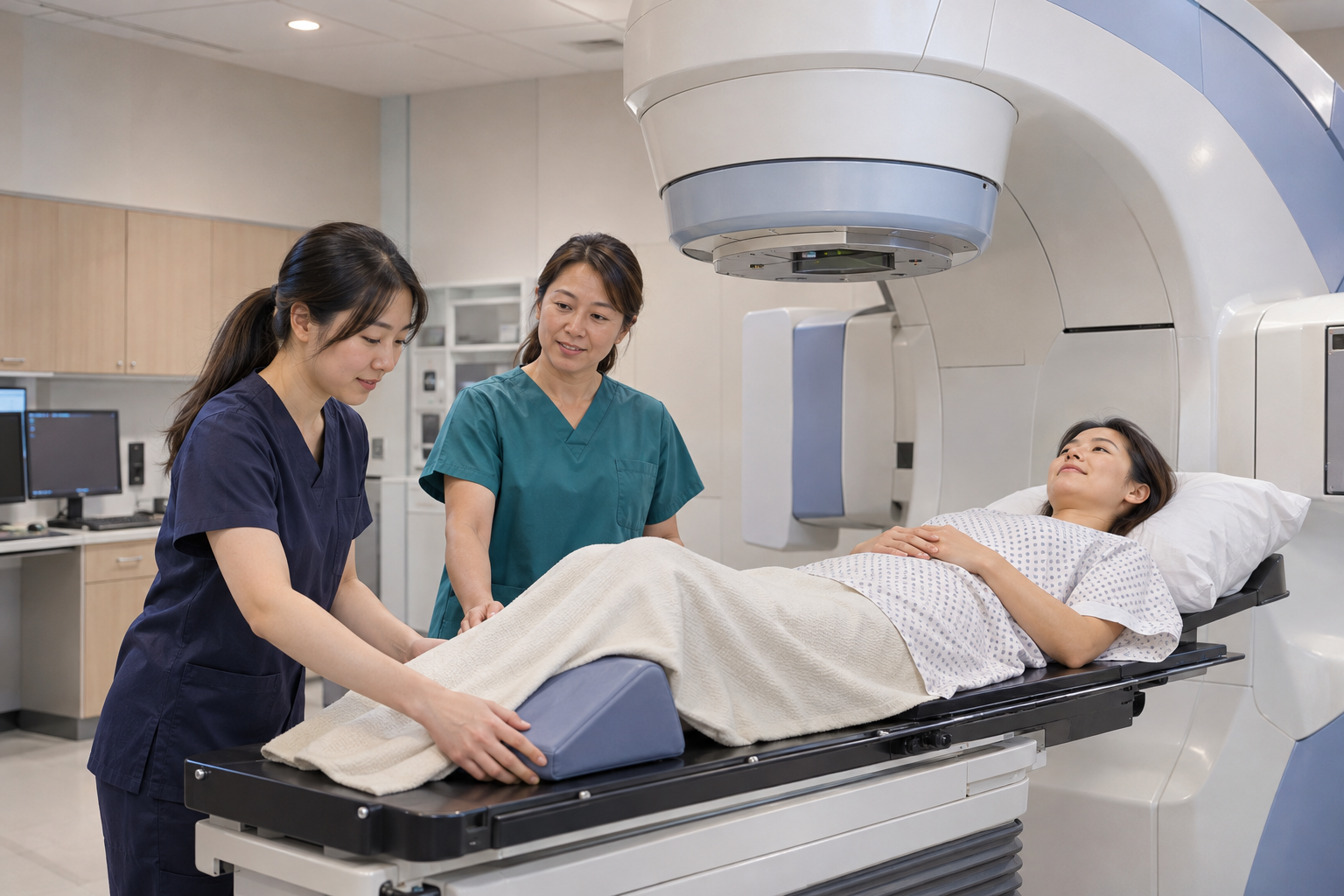
Treatment preparation involves using imaging and positioning methods to help reproduce a patient’s treatment position accurately. Students learn about planning scans, immobilisation equipment and the principles of treatment planning. They explore how treatment plans are developed and checked through collaboration between radiation oncologists, medical physicists, radiation therapists and other team members.
Practical learning introduces the equipment and procedures used to deliver radiation treatment, including external beam therapy using linear accelerators. Students develop skills in checking patient identity, verifying treatment information and assessing positioning images under supervision. They learn to recognise discrepancies, follow safety procedures and seek appropriate advice before proceeding.
Communication and patient wellbeing are central to radiation therapy. Students practise explaining procedures, listening to concerns and supporting people who may experience anxiety, fatigue or other treatment-related difficulties. Simulation and supervised clinical placements help develop teamwork, professional judgement and respectful care, while research methods support the evaluation of evidence and improvements in practice.
Radiation therapy differs from diagnostic radiography, which primarily produces images to investigate health conditions. In the UK, professional qualifying courses commonly use the term therapeutic radiography. A radiation therapy degree does not qualify graduates as radiation oncologists, who are medical doctors. Before enrolling, check the exact qualification, awarding institution, clinical training and registration requirements for your intended country of practice. Completing a degree does not automatically provide permission to practise.
What Will You Study?
Anatomy, Cancer Biology & Radiation Science
Study human anatomy, physiology and how cancer develops and affects the body. Explore radiation physics and radiobiology, including how ionising radiation interacts with cells and tissues. Connect these principles with the aims of treatment and the need to protect surrounding healthy structures.
Treatment Planning, Imaging & Delivery
Explore how planning scans, positioning and immobilisation support accurate treatment. Learn the principles of dose planning, treatment verification and operating radiation therapy equipment under supervision. Study how imaging helps check patient positioning and how multidisciplinary teams develop and deliver prescribed treatment plans.
Patient Care, Communication & Safety
Develop skills in explaining procedures, responding sensitively to concerns and supporting patients throughout treatment. Learn to recognise treatment-related difficulties and communicate concerns to the appropriate team members. Explore consent, confidentiality, radiation protection, quality assurance and the checks needed to reduce treatment errors.
Simulation & Supervised Clinical Placements
Apply your learning through simulation and supervised experience in radiation therapy departments. Build practical competence in patient preparation, positioning and treatment procedures while working within your level of training. Develop teamwork and professional judgement, alongside research and critical appraisal skills that support improvements in practice.
These are typical study areas for professional qualifying radiation therapy programmes, commonly called therapeutic radiography in the UK. Subjects, equipment, treatment techniques and placement arrangements vary by university and programme. Advanced responsibilities may require further training. Check the exact qualification’s professional approval and the registration requirements for your intended country of practice.
Entry Requirements & Study Pathways
Your pathway into radiation therapy depends on your academic qualifications, subject background and the requirements of your chosen university. Check that the programme provides an initial professional qualification in radiation therapy, commonly called therapeutic radiography in the UK, including assessed clinical training. Review the registration requirements for your intended country of practice before choosing your course.
| Your Qualification | Possible Study Pathway |
|---|---|
| Singapore O Levels | Further study through A Levels, the IB Diploma or a specifically accepted foundation or diploma programme may help you meet undergraduate entry requirements. Confirm that the pathway allows progression to your intended radiation therapy or therapeutic radiography degree, including required subjects, progression grades and any additional selection conditions. Places on professional healthcare programmes may be limited. |
| Singapore A Levels / IB Diploma | You may be eligible for direct entry into an undergraduate radiation therapy or therapeutic radiography programme, depending on your results and subject combination. Check requirements for biology, physics, mathematics or other accepted sciences, alongside English language and interview requirements. For broader medical radiation science degrees, confirm how students enter the radiation therapy stream and whether international places are available. |
| Polytechnic Diploma | Your application will be assessed against the university’s requirements, including your diploma discipline, GPA and relevant modules. Provide details of anatomy, physiology, physics, radiation science or related studies where relevant. Credit transfer and advanced entry are assessed individually and should not be assumed, particularly for professional subjects and clinical placements. Check whether exemptions affect recognition for your intended country of practice. |
| Bachelor’s Degree | Graduates can explore qualifying graduate-entry or pre-registration radiation therapy programmes where available. Admission may require a relevant degree, specified prerequisite subjects and suitable academic results. Distinguish these courses from advanced programmes intended for already-qualified professionals. A postgraduate degree in oncology, medical physics or radiation science should not be assumed to provide an initial professional radiation therapy qualification. |
Additional Admission Requirements
Depending on the programme, you may need evidence of English language proficiency, references, a personal statement or an interview. Health screening, vaccination evidence and background checks may be required for clinical placements. Review practical participation requirements, discuss support needs with the university, and check placement locations, travel and additional costs. Before enrolling, confirm the exact qualification, awarding institution and study arrangements against the professional recognition and registration requirements of your intended country of practice.
Featured Universities
Explore radiation therapy degrees in the UK and Australia. UK programmes commonly use the term therapeutic radiography. Compare cancer science, treatment planning, patient care and supervised clinical training, alongside entry requirements and professional recognition for your intended country of practice.
United Kingdom

Cardiff University
BSc (Hons) Radiotherapy and Oncology
Explore a three-year programme combining academic and clinical learning to prepare for therapeutic radiography practice. Develop knowledge of cancer treatment, radiation science and patient care, building the skills to respond to developments in clinical radiotherapy and work within specialist healthcare teams.

Sheffield Hallam University
BSc (Honours) Radiotherapy and Oncology
Develop scientific understanding and practical skills for a career in therapeutic radiography. Connect university learning with clinical experience, building competence in treatment procedures and patient-centred care. Successful completion supports eligibility to apply for UK HCPC registration, subject to its requirements.
Australia

Queensland University of Technology
Bachelor of Radiation Therapy
Consider a dedicated professional degree preparing students for radiation therapy in cancer care. Develop knowledge of treatment science and technology alongside practical and patient-care skills. Compare the course’s clinical learning and progression requirements, including the separate conditions for any honours option.

University of Newcastle, Australia
Bachelor of Medical Radiation Science (Honours) (Radiation Therapy)
Study radiation therapy within a professional medical radiation science qualification. Combine scientific and technical learning with supervised clinical placements, developing skills relevant to cancer treatment and patient support. Select the Radiation Therapy programme, as Diagnostic Radiography and Nuclear Medicine are separate study routes.
Subjects, entry requirements, treatment techniques and clinical placement arrangements vary by programme. Check international student eligibility, placement locations and additional costs. Campus images are illustrative and may not depict the teaching location. Advanced responsibilities may require further training.
Planning to Practise in Singapore?
The four featured qualifications appear in AHPC’s published radiation therapy recognition list. Before enrolling, check the latest list and ensure that the exact qualification title and awarding institution match. Do not assume that a different course title, honours option or related qualification has the same recognition.
AHPC states that there is no Qualifying Examination for Radiation Therapy. Seek clarification directly from AHPC before choosing a programme if its qualification title or awarding institution differs from the published list.
A recognised qualification does not automatically grant registration or permission to practise. Graduates must also meet AHPC’s prevailing registration requirements and hold a valid Practising Certificate before practising in Singapore.
View Official AHPC Recognition List ↗Looking for Other University Options?
These are selected examples. We can help you compare radiation therapy programmes based on your qualifications, preferred destination, professional goals and study requirements.
Discuss Your Study OptionsCareer Opportunities

After completing an appropriate radiation therapy programme and meeting professional registration requirements, graduates can explore careers in cancer centres, hospitals and related organisations. Career progression depends on clinical competence, experience and any additional training required for specialist techniques, research or leadership responsibilities.
Clinical Radiation Therapy
Deliver prescribed radiation treatment as part of a multidisciplinary cancer care team. Prepare and position patients, complete treatment checks and operate equipment within your competence. Support patients throughout their treatment course, recognise concerns and communicate promptly with the appropriate healthcare professionals.
Treatment Simulation & Planning
With suitable training, contribute to planning scans, immobilisation and the development of treatment plans. Work with radiation oncologists, medical physicists and other colleagues to support accurate treatment preparation. Planning and dosimetry responsibilities vary by country and employer and may require further qualifications.
Specialist Treatment Techniques
Develop expertise in areas such as stereotactic treatments, image-guided radiotherapy or brachytherapy support, depending on the service and your training. Specialist practice involves additional competencies, supervised experience and close teamwork. Exposure to a technique during your degree does not automatically qualify you to perform every related responsibility.
Quality Improvement & Treatment Safety
With relevant experience, help review treatment workflows, strengthen documentation and improve patient safety. Contribute to audits, incident learning and the implementation of approved procedures. Technical quality assurance responsibilities are shared across professional teams and depend on your training, authorisation and local arrangements.
Radiotherapy Education & Research
After building suitable experience, support student supervision, staff development or research into treatment practice and patient experience. Research roles may involve study coordination, data collection or evaluating new approaches. Academic and advanced research positions may require postgraduate qualifications and specialist research or teaching skills.
Service Leadership & Technology
With experience and additional skills, progress towards team coordination, service development or department management. Industry opportunities may include equipment applications, customer training and implementation support. These roles can require further expertise in leadership, treatment systems, project management or commercial communication.
These are examples of career directions rather than guaranteed outcomes. Professional registration and scope of practice vary by country. Specialist and advanced roles may require further experience, training or qualifications. A radiation therapy degree does not qualify graduates as radiation oncologists or medical physicists, or automatically provide a diagnostic radiography qualification.
Let’s plan your next step
Tell us about your qualifications and radiation therapy study goals.
Enquire about studying radiation therapy →
Entry requirements and available pathways vary by institution and course.