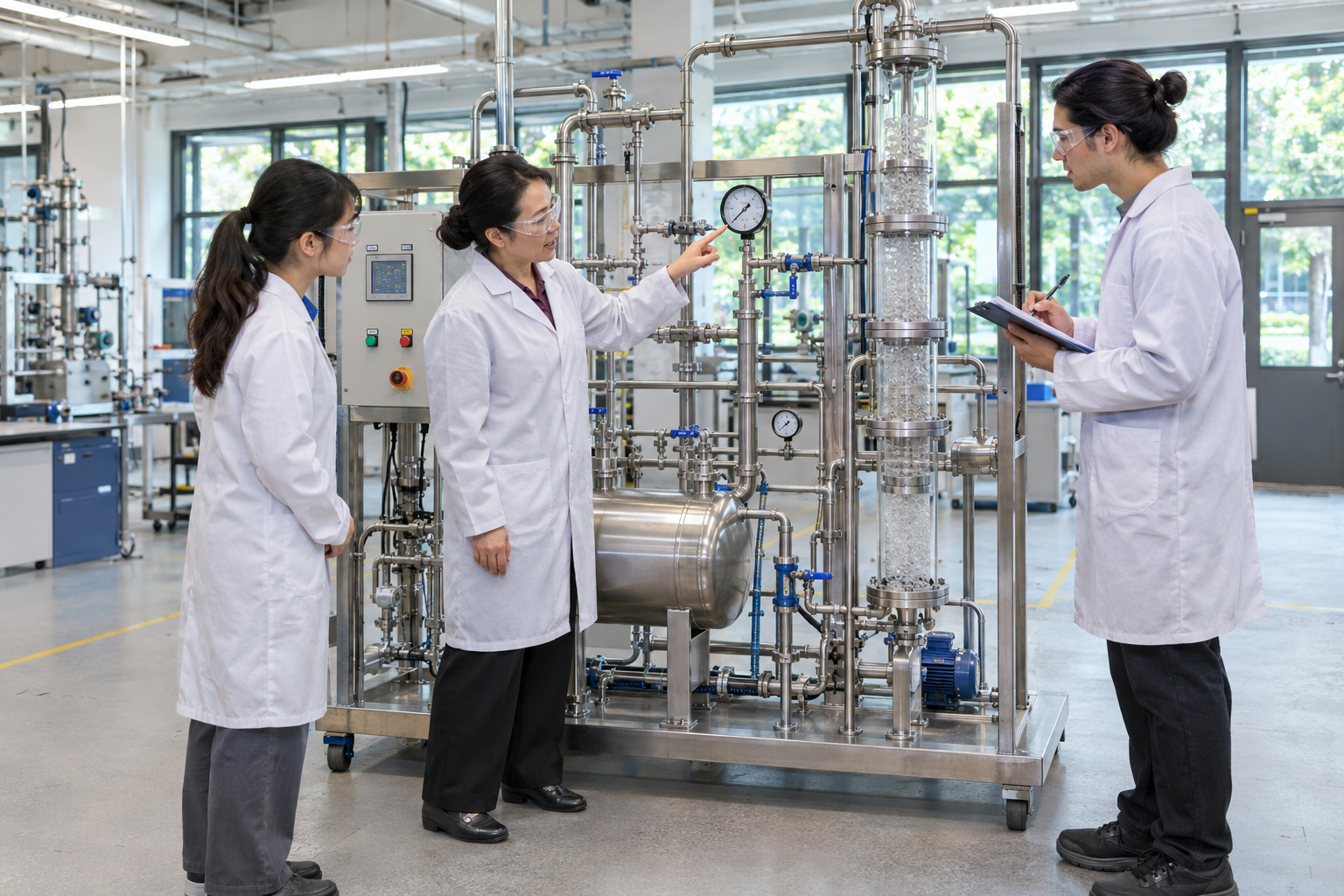
ENGINEERING
Study Chemical Engineering Overseas
Explore chemical engineering degrees, study pathways and university options in the UK and Australia. Discover how chemistry, mathematics and engineering principles help transform raw materials into useful products, from medicines and food to fuels and advanced materials, while considering process safety, efficiency and sustainability.
What is Chemical Engineering?
Chemical engineering applies mathematics, chemistry, physics and engineering principles to processes that transform raw materials into useful products. It supports industries producing medicines, food, fuels, chemicals and advanced materials, as well as water treatment and resource recovery. Chemical engineers consider how processes can operate safely, reliably and efficiently while managing costs and environmental impact.
Students build a foundation in engineering mathematics, chemistry, thermodynamics and material and energy balances. They learn to track substances and energy through a process, understand physical properties and predict how operating conditions affect performance. These principles help connect scientific knowledge with the design and analysis of practical production systems.
The subject explores how fluids move and how heat and substances are transferred. Students study operations such as mixing, heating, cooling, filtration and distillation, investigating how equipment separates or changes materials. Reaction engineering examines reaction rates and reactor behaviour, helping students evaluate how products can be made under suitable operating conditions.
Process design brings these ideas together to develop complete production systems. Students may use simulation and computational tools to compare equipment, operating conditions and process layouts. They explore control systems, economic evaluation and process safety, considering how to manage hazards, maintain product quality and reduce energy use, emissions and waste.
Practical learning may include laboratory experiments, pilot-scale equipment and individual or team design projects. Students learn to collect measurements, analyse data and compare experimental findings with mathematical predictions. Depending on the programme, specialist options may include biochemical engineering, pharmaceutical processing, sustainable energy or materials. Projects develop teamwork, technical communication and responsible engineering judgement.
Chemical engineering is closely connected with chemistry, but places particular emphasis on designing, operating and improving processes at practical production scales. Programmes vary in their specialist subjects, facilities, accreditation and industry experience. Compare the exact qualification and study arrangements before applying. A degree provides an academic foundation; professional registration or chartered status may also require further learning, relevant experience and assessment.
What Will You Study?
Engineering Mathematics, Thermodynamics & Process Balances
Develop mathematical methods for analysing chemical processes. Study material and energy balances to track substances and energy through equipment and production systems. Explore thermodynamics, physical properties and phase behaviour, connecting scientific principles with calculations used to evaluate process conditions, energy requirements and performance.
Fluid Flow, Heat Transfer & Separation Processes
Explore how fluids move and how heat and substances are transferred within processes. Study equipment and operations such as pumps, heat exchangers, distillation columns and filtration systems. Learn to analyse flow, heating, cooling and separation requirements while considering efficiency, equipment selection and practical operating limitations.
Reaction Engineering, Process Control & Safety
Study reaction rates, reactor behaviour and how operating conditions influence conversion and product formation. Explore measurement, feedback and control methods used to maintain process performance. Develop an understanding of hazard identification, risk assessment and safeguards, considering how design and operating decisions affect people, equipment and the environment.
Process Design, Practical Projects & Sustainability
Bring engineering principles together through laboratory investigations and individual or team design projects. Use computational tools to model processes, compare options and evaluate costs. Consider energy use, emissions, waste and resource recovery while developing skills in data analysis, technical communication, teamwork and responsible engineering judgement.
These are typical study areas for chemical engineering degrees. Specialist options such as biochemical engineering, pharmaceutical processing, energy and materials vary by university and programme. Laboratory facilities, pilot-scale activities, software, projects and industry placements also differ. Check the exact qualification, campus and accreditation status, along with any further learning or experience needed for your intended professional pathway.
Entry Requirements & Study Pathways
Your pathway into chemical engineering depends on your academic qualifications, mathematics and science background, and the requirements of your chosen university. Compare programmes covering process design, thermodynamics, reaction engineering and practical laboratory learning. Review foundation or diploma progression, credit transfer opportunities and professional accreditation alongside entry requirements.
| Your Qualification | Possible Study Pathway |
|---|---|
| Singapore O Levels | Further study through A Levels, the IB Diploma or an accepted engineering foundation or diploma programme may help you meet undergraduate entry requirements. Confirm that the pathway leads to your intended chemical engineering degree and includes the required mathematics and science subjects. Check whether chemistry and physics are required, alongside progression grades and any conditions for entering a particular degree route. |
| Singapore A Levels / IB Diploma | You may be eligible for direct entry into an undergraduate chemical engineering programme, depending on your results and subject combination. Check the required level of mathematics and whether chemistry, physics or another science is compulsory. Where the university offers bachelor’s and integrated master’s routes, compare their entry requirements and transfer conditions. Some engineering degrees begin with a common first year before students select their discipline. |
| Polytechnic Diploma | Your application will be assessed against the university’s requirements, including your diploma discipline, GPA and relevant modules. Provide details of engineering mathematics, chemistry, material and energy balances, thermodynamics, fluid mechanics, process operations and practical projects where relevant. Credit transfer or advanced entry is assessed individually and is not automatic. Check the remaining study duration, prerequisite subjects and whether your proposed pathway meets the professional accreditation or recognition requirements relevant to your career. |
| Bachelor’s Degree | Graduates can explore taught or research postgraduate programmes in chemical engineering and related fields, subject to academic results and prerequisite knowledge. Some courses require a chemical engineering degree, while others consider related engineering or science backgrounds. Check any required preparation in mathematics, thermodynamics, transport processes and reaction engineering. Distinguish advanced specialist study from programmes designed to provide an initial professional engineering qualification. A master’s degree does not automatically resolve gaps in an earlier qualification’s accreditation or recognition. |
Additional Admission Requirements
Depending on the programme, you may need specific mathematics and science subjects, evidence of English language proficiency, references or a personal statement. Applicants seeking credit transfer may need detailed module descriptions, while research applicants may require a proposal and an available supervisor. Check international student eligibility, application deadlines, laboratory participation requirements, project and equipment costs, and whether industry placements are included, optional or competitive. Before enrolling, confirm the exact qualification, campus, study mode and accreditation coverage for your intended intake and professional pathway.
Featured Universities
Explore selected universities offering chemical engineering degrees. Compare process design, practical facilities, sustainability and specialist options, alongside industry experience and professional accreditation.
United Kingdom
University of Bath
BEng (Hons) Chemical Engineering
Develop chemical engineering knowledge through laboratory sessions, process modelling and individual and group design projects. Bath’s facilities range from bench-scale to pilot-scale equipment. Apply your learning to process design challenges while building skills in data analysis, teamwork, communication and resource management.
Bath is working towards IChemE reaccreditation. Confirm accreditation coverage for your intended intake before enrolling.
Teesside University
BEng (Hons) Chemical Engineering
Develop chemical engineering knowledge through a course supported by industry links and opportunities for industry-focused projects. Compare its process engineering subjects and practical learning with your interests. A foundation-year route is also available for applicants who need additional preparation, subject to entry requirements.
Australia

UNSW Sydney
Bachelor of Engineering (Honours) (Chemical Engineering)
Explore chemical engineering with applications across chemical processing, pharmaceuticals, food, energy and water treatment. Compare the degree’s technical subjects and project opportunities with your intended industry. The chemical engineering specialisation is accredited by Engineers Australia; check the exact programme and intake coverage for your professional goals.
RMIT University
Bachelor of Engineering (Chemical Engineering) (Honours)
Study chemical engineering at RMIT’s Melbourne City campus, applying chemical, physical and biological sciences to industrial processes and products. Project-based learning and laboratory sessions connect theory with practical challenges. Explore ways to improve production efficiency, reduce energy consumption and minimise waste across applications such as water purification and food processing.
These are selected examples. Course titles, modules, entry requirements and placement arrangements may change. Check the exact qualification, campus, study route and accreditation coverage for your intended intake. Optional placements may require separate applications and are not guaranteed.
Check Your Professional Pathway
An accredited engineering degree provides an academic foundation for professional development. It does not automatically confer professional registration or chartered status. Before choosing your programme, check the requirements of the professional body or regulator in your intended country of work, including how advanced entry, credit exemptions or overseas delivery may affect your pathway.
Looking for Other University Options?
We can help you explore other chemical engineering courses based on your qualifications, preferred destination, budget and career interests.
Discuss Your Study Options →Professional Recognition & Registration

Accreditation assesses an engineering programme, while professional registration assesses an individual’s qualifications, competence and experience. Completing a chemical engineering degree does not automatically make you a Singapore Professional Engineer or a UK Chartered Engineer.
Becoming a Professional Engineer in Singapore
PEB registers Professional Engineers in the chemical engineering branch. Graduates considering this pathway should check whether their exact qualification and work experience meet its requirements. The standard route for new applicants is outlined below.
| Requirement | What It Involves |
|---|---|
| Approved qualification | Meet PEB’s qualification requirements for chemical engineering, including any applicable conditions or supplementary study. |
| Fundamentals examination | Meet the eligibility requirements and pass the Fundamentals of Engineering Examination (FEE) in the relevant branch. |
| Relevant practical experience | Acquire at least four years of acceptable experience. For the standard chemical engineering route, this includes at least two years in Singapore under a registered Professional Engineer holding a valid Practising Certificate. Qualifying work includes process design, process operations, process safety management, or chemical engineering inspection, investigation, assessment or evaluation. |
| Professional practice examination | After passing the FEE and meeting the examination eligibility requirements, pass the Practice of Professional Engineering Examination (PPE). |
| Registration assessment | Submit the required evidence, attend the professional interview and satisfy PEB’s registration assessment. |
Detailed conditions apply to experience timing, recency, supervision and responsibilities. Different provisions may apply to experienced applicants and those in teaching or research. Check current PEB guidance for your circumstances.
View Official PEB Registration Requirements ↗Choosing a Degree for Your Professional Goal
Before enrolling, check the exact qualification, discipline, university, campus and accreditation coverage for your intake. If Singapore PE registration is your goal, confirm that your complete study pathway meets PEB’s qualification requirements. Overseas accreditation does not automatically establish eligibility for Singapore registration.
For UK Chartered Engineer (CEng) registration, an accredited integrated MEng is one recognised academic route. Another is an appropriately accredited honours bachelor’s degree combined with suitable accredited postgraduate study or assessed further learning to master’s level. Applicants must also demonstrate professional competence and commitment. Individual assessment routes are available for applicants with other qualifications.
If you are considering diploma exemptions, advanced entry, a top-up degree or study across different institutions, ask the relevant regulator or professional body how your proposed arrangement affects recognition. Check the complete combination of qualifications rather than assuming that any additional master’s degree will satisfy professional requirements.
Explore UK Chartered Engineer Requirements ↗Career Opportunities
Chemical engineering graduates can explore careers designing, operating and improving processes that turn raw materials into useful products. Opportunities span chemicals, pharmaceuticals, food, energy, materials and water treatment. Your pathway depends on your specialist subjects, practical experience and the requirements of individual employers. Some responsibilities require further training or professional registration.
Process Design & Development
Help develop processes for producing chemicals, materials and other products. Work may involve material and energy balances, process simulation, equipment sizing and evaluating operating conditions. Collaborate with other engineering specialists to compare options, considering product requirements, safety, cost, energy use and environmental performance.
Manufacturing & Process Operations
Support the reliable operation of production processes in chemical plants and other manufacturing facilities. Responsibilities may include monitoring performance, investigating process problems and recommending improvements. Develop knowledge of equipment, control systems, operating procedures and quality requirements, with training specific to the products and working environment.
Pharmaceutical, Bioprocess & Food Engineering
With relevant specialist training, contribute to processes used to manufacture medicines, biological products or food. Work may involve production scale-up, separation, purification or process validation. These sectors have distinct technical and quality requirements, so roles may require additional expertise in bioprocessing, hygiene, contamination control or Good Manufacturing Practice.
Energy & Sustainable Processing
Apply thermodynamics, reaction engineering and separation principles to energy production and resource efficiency. Depending on your training, explore work involving fuels, hydrogen, carbon capture or energy recovery. Evaluate process options, energy requirements and emissions, recognising that specialist technologies may require further study and practical experience.
Water Treatment & Resource Recovery
Contribute to processes that treat water, manage industrial effluent or recover useful materials from waste streams. Tasks may include evaluating treatment methods, analysing operating data and improving separation or recovery performance. Build specialist knowledge of relevant chemistry, biological processes and environmental requirements for the systems involved.
Process Safety, Consultancy & Research
With appropriate training and experience, contribute to hazard studies, risk assessment, technical consultancy or research into new processes and products. Specialist safety responsibilities require relevant competence and supervised development. Advanced research and academic careers commonly require postgraduate qualifications, while senior engineering responsibilities may require professional registration.
These are examples of career directions rather than guaranteed outcomes. Some roles require specialist technical training, relevant experience or postgraduate qualifications. Completing an engineering degree does not automatically confer Chartered Engineer status or registration as a Singapore Professional Engineer. A chemical engineering degree does not qualify graduates as pharmacists. Check the requirements for your intended responsibilities and country of work.
Let’s plan your next step
Tell us about your qualifications and chemical engineering study goals.
Enquire about studying chemical engineering →
Entry requirements and available pathways vary by institution and course.