HEALTH & LIFE SCIENCES
Study Cosmetic Science Overseas
Explore cosmetic science degrees, study pathways and university options, with a focus on the science behind skincare, personal care and beauty products.
What is Cosmetic Science?
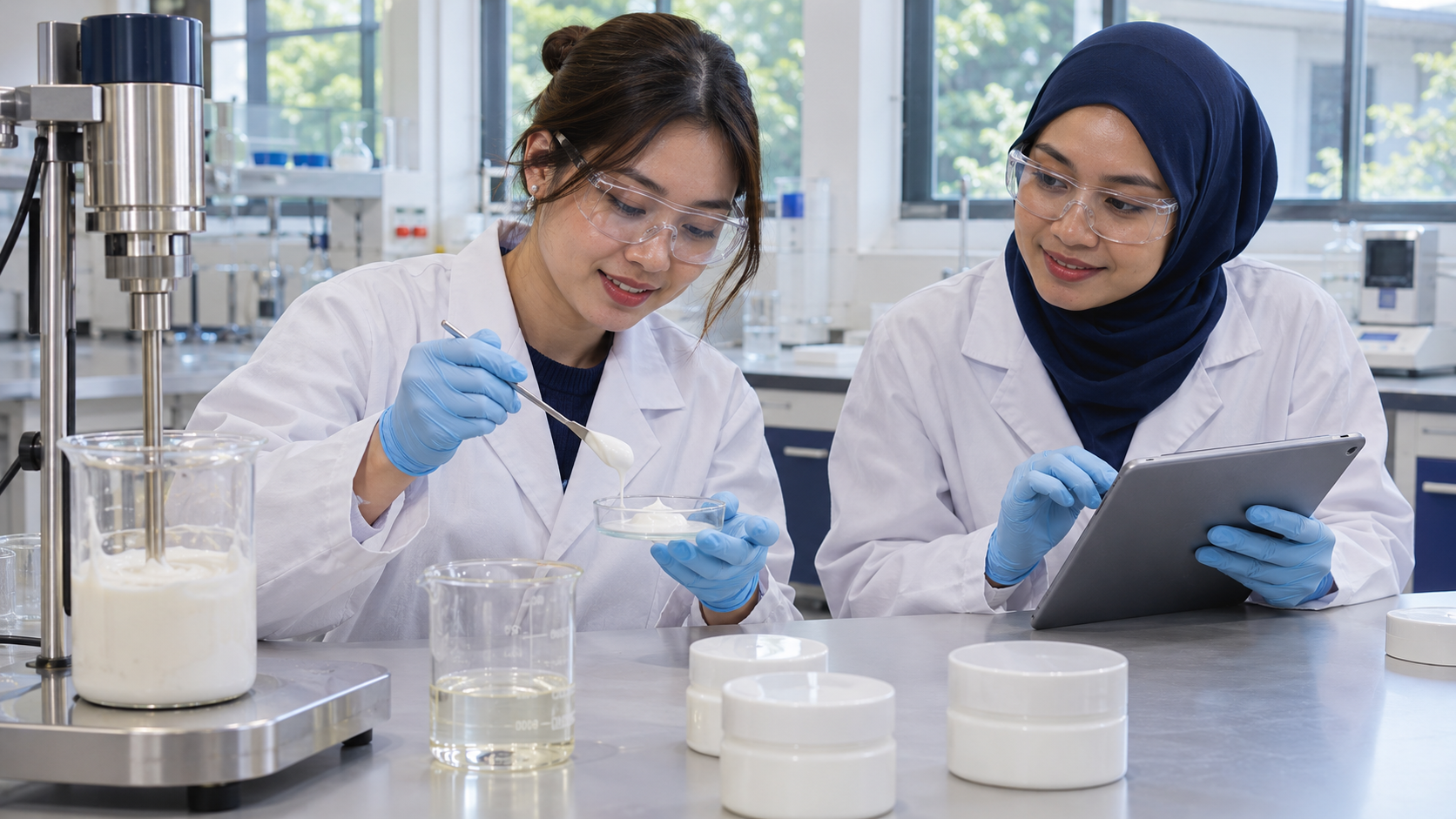
Cosmetic science is the study of how skincare, haircare, makeup, fragrances and other personal care products are developed, manufactured and evaluated. It combines chemistry, biology, microbiology and materials science with an understanding of consumer needs, turning product ideas into formulations that can be tested and produced consistently.
A central part of the field is formulation science: selecting ingredients and combining them in suitable amounts to achieve a particular purpose. Students explore the roles of ingredients such as moisturising agents, oils, emulsifiers, cleansing agents, pigments and preservatives. They learn how ingredient interactions, pH and processing methods can influence a product’s texture, appearance, fragrance and performance.
Cosmetic scientists also study the structure and function of the skin and hair to understand how products interact with them. For example, developing a moisturiser involves considering hydration, the skin barrier and how the formulation feels during use. Developing a shampoo involves balancing cleansing performance with factors such as mildness, foaming and ease of rinsing.
Testing and evaluation help determine whether a formulation is suitable for its intended use. Depending on the product, this may include measuring pH and viscosity, monitoring stability under different storage conditions, checking compatibility with packaging and assessing microbiological quality. Laboratory and consumer studies can also help evaluate performance and provide evidence for product claims.
The subject extends beyond making small samples in a laboratory. Students may explore how formulations are scaled up for manufacturing, how raw materials and finished products are checked, and how production processes are documented. Other areas include ingredient sourcing, packaging choices, waste reduction and the scientific challenges involved in developing more sustainable products.
Studying cosmetic science develops practical laboratory skills, analytical thinking and an understanding of the product development process. Depending on the programme and further experience, graduates may explore work in formulation, research and development, product testing, quality control, manufacturing, technical support or regulatory affairs. Course content varies, so students should compare the balance of chemistry, laboratory work and industry-focused learning.
What Will You Study?
Chemistry & Cosmetic Ingredients
Build a foundation in chemistry and explore the properties and functions of cosmetic ingredients, including oils, surfactants, emulsifiers, preservatives and pigments. Learn how ingredient interactions, concentration and pH influence product stability, texture and performance.
Skin, Hair & Microbiology
Study the structure and function of skin and hair, including the skin barrier and factors affecting their condition. Explore how products interact with these surfaces, alongside microbiological principles relevant to contamination, preservation and product quality.
Formulation & Product Development
Develop practical laboratory skills in preparing and refining products such as creams, cleansers, shampoos and makeup. Explore emulsions, gels and other formulation types, considering ingredient selection, processing methods, sensory properties, packaging compatibility and manufacturing scale-up.
Testing, Quality & Product Compliance
Learn how cosmetic products are evaluated through stability studies, analytical measurements and performance testing. Explore safety assessment principles, quality control, evidence supporting product claims and the role of ingredient information, labelling and documentation in product compliance.
These are typical study areas. Subjects, laboratory facilities, projects and industry placement opportunities vary by university and programme.
Entry Requirements & Study Pathways
Your pathway into cosmetic science depends on your academic qualifications, science background and the requirements of your chosen university. Compare each programme’s focus on chemistry, formulation and practical laboratory work alongside its entry requirements.
| Your Qualification | Possible Study Pathway |
|---|---|
| Singapore O Levels | Further study through A Levels, the IB Diploma or a suitable foundation or diploma programme may help you meet undergraduate entry requirements. Confirm that your chosen pathway is accepted for the intended degree and includes any required science subjects. |
| Singapore A Levels / IB Diploma | You may be eligible for direct entry into an undergraduate cosmetic science programme, depending on your grades and subject combination. Check whether chemistry or other science and mathematics subjects are required for your chosen course. |
| Polytechnic Diploma | Your application will be assessed against the university’s requirements, including your diploma discipline, GPA and relevant modules. Provide details of your chemistry, formulation or laboratory studies where relevant. Any credit transfer or advanced entry is assessed separately and is not automatic. |
| Bachelor’s Degree | If you are considering postgraduate cosmetic science study, check which previous degrees and prerequisite subjects the programme accepts. Eligibility may depend on the scientific content of your degree, academic results and relevant experience. Compare the course’s emphasis on formulation, research and industry applications. |
Additional Admission Requirements
Depending on the university and programme, you may need specific science subjects, evidence of English language proficiency, a personal statement, references or an interview. For postgraduate applications, module descriptions or evidence of relevant work experience may also be requested. Check the requirements for your intended intake before applying.
Featured Universities
Explore a dedicated cosmetic science degree in the UK and a related pharmaceutical science route in Australia, with formulation skills relevant to cosmetic product development.
UNITED KINGDOM
University of Sunderland
BSc (Hons) Cosmetic Science
Study the science behind skincare, haircare and cosmetic products. Develop knowledge of ingredients, formulation and product evaluation through scientific study and practical laboratory learning.
AUSTRALIA
Monash University
Bachelor of Pharmaceutical Science
Explore the chemistry, biology and formulation of products through scientific study and practical learning. Formulation science teaching includes applications relevant to cosmetics and other consumer products.
This is a related pharmaceutical science route, rather than a dedicated Cosmetic Science degree. Review the available formulation subjects and course structure when comparing your options.
Need Help Choosing Your Programme?
Contact UniGlobal to discuss your qualifications, interests and career goals, and compare cosmetic science and related formulation science study options.
Explore My Study Options →Working in Singapore
If you plan to work in Singapore’s cosmetics and personal care industry, compare your chosen programme with the scientific knowledge, laboratory skills and experience required by prospective employers.
Qualifications & Industry Requirements
Cosmetic science is an industry-focused field rather than an AHPC-regulated clinical profession. Working in cosmetic formulation or product development does not require an AHPC Practising Certificate. Employers set their own qualification and experience requirements for individual roles.
When choosing a degree, look for relevant study in chemistry, formulation, microbiology, analytical testing and product development. Practical laboratory projects and industry experience can help you demonstrate the skills needed for formulation, quality control and research roles.
In Singapore, cosmetic products are regulated by the Health Sciences Authority (HSA). Products supplied locally must meet applicable requirements aligned with the ASEAN Cosmetic Directive, including requirements relating to ingredients, labelling and product safety.
A cosmetic product notification generally needs to be submitted to HSA before the product is supplied in Singapore, subject to applicable exemptions. Notification is not HSA approval or certification of the product’s safety or quality. Companies supplying cosmetic products remain responsible for their safety, quality and compliance.
A cosmetic science degree does not qualify a graduate to practise medicine or perform medical aesthetic procedures. Before applying for a course, consider your intended career and check the latest employer requirements and relevant industry guidance.
View HSA Cosmetic Product Guidance ↗Career Opportunities
Cosmetic science graduates can explore scientific, technical and commercial roles across the cosmetics, fragrance and personal care industries. Opportunities depend on your course content, practical experience and the requirements of individual employers.
Formulation & Research
Develop and refine skincare, haircare and cosmetic products. Investigate ingredients, prepare laboratory samples and evaluate formulations, contributing to new products and improvements in texture, stability and performance.
Product Testing & Claims
Help evaluate product quality and performance through laboratory measurements, stability studies and other appropriate testing methods. Analyse results and contribute evidence to support accurate product claims.
Regulatory Affairs & Quality
Support ingredient reviews, labelling checks and product documentation for different markets. Quality roles may involve checking materials and finished products against specifications, maintaining records and investigating inconsistencies.
Fragrance & Perfumery
Explore opportunities within fragrance development, evaluation and applications for personal care products. Specialist perfumer roles may require further training and experience to develop expertise in fragrance materials and composition.
Manufacturing & Technical Support
Help transfer laboratory formulations into larger-scale production and troubleshoot processing issues. Technical support roles may involve demonstrating ingredients, preparing sample formulations and advising product development teams.
Marketing & Science Communication
Combine scientific understanding with communication skills to explain ingredients, product benefits and supporting evidence. Depending on additional skills and experience, opportunities may include product marketing, educational content and specialist media or television work.
Career Paths Highlighted by Sunderland
The University of Sunderland identifies research and development, product formulation, regulatory affairs, perfumery, marketing, product testing and claims, and media or TV as potential career directions for its Cosmetic Science graduates.
Explore Sunderland’s Course & Careers ↗These are examples of career directions rather than guaranteed outcomes. Some roles require additional experience, specialist training or postgraduate study.
Let’s plan your next step
Tell us about your qualifications and cosmetic science study goals.
Enquire about studying cosmetic science →
Entry requirements and available pathways vary by institution and course.