COMPUTING & TECHNOLOGY
Study Digital Forensics Overseas
Explore Digital Forensics courses, study pathways and university options overseas. Discover how digital evidence is identified, collected, preserved and analysed to support investigations involving computers, mobile devices, networks and cyber incidents.
What is Digital Forensics?
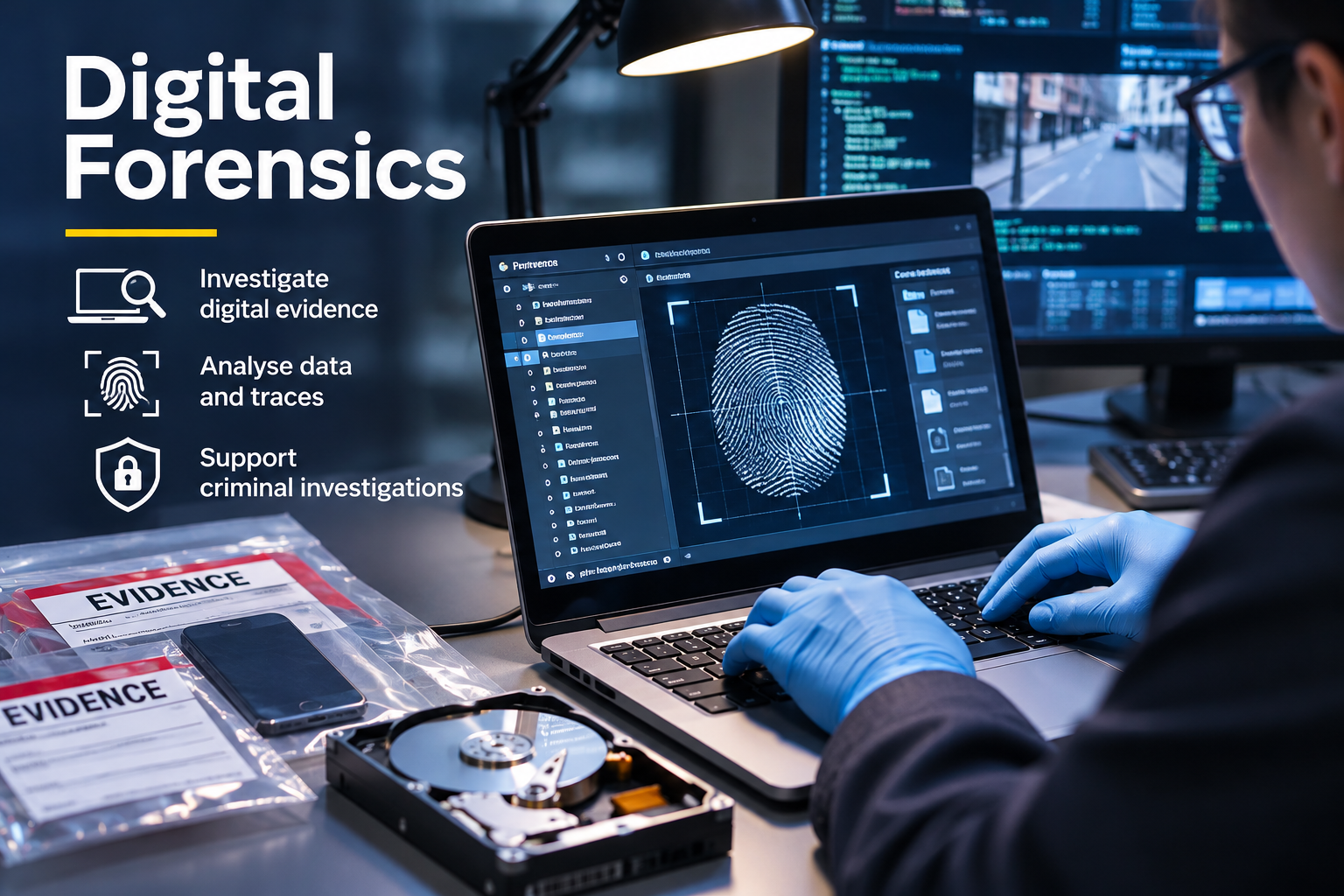
Digital Forensics focuses on identifying, collecting, preserving, examining and analysing digital evidence from computers, mobile devices, networks and other electronic systems. It supports investigations into cyber incidents, suspected criminal activities, data breaches and other situations where digital information may be relevant.
Students develop foundations in computer systems, operating systems, file systems, computer networks and information security. Depending on the programme, they may also study computer forensics, mobile device forensics, network forensics, digital evidence handling and forensic investigation techniques.
Digital Forensics also involves understanding how electronic evidence can be recovered, interpreted and documented while maintaining its integrity. Students may explore forensic imaging, data recovery, examination of digital artefacts, chain-of-custody procedures and the legal and ethical considerations involved in digital investigations.
Practical learning may include examining forensic copies of storage devices, analysing system logs, investigating simulated cyber incidents and preparing technical investigation reports. Laboratory exercises, forensic software tools and case-based projects help students develop analytical, investigative and problem-solving skills.
Digital Forensics overlaps with Cybersecurity, Computer Science and Criminal Investigation, but places greater emphasis on examining digital evidence and reconstructing events. It may be offered as a standalone degree or as a specialisation within a computing or cybersecurity programme. Students should compare forensic modules, laboratory facilities, practical training and career pathways before choosing a course.
What Will You Study?
Computer & Mobile Device Forensics
Explore how digital evidence is examined on computers, storage devices and mobile phones. Study operating systems, file systems, forensic imaging, data recovery and the analysis of digital artefacts that may help reconstruct activities on electronic devices.
Digital Evidence & Investigation Procedures
Learn how digital evidence is identified, collected, preserved and documented during investigations. Students may explore chain-of-custody procedures, evidence integrity, forensic examination methods and the legal and ethical responsibilities involved in handling digital information.
Network Forensics & Cyber Incident Investigation
Study how network traffic, system logs and other digital records can be analysed to investigate cyber incidents. Topics may include network evidence collection, intrusion analysis, incident reconstruction and methods of identifying suspicious activities across connected systems.
Forensic Tools, Analysis & Reporting
Develop practical skills using digital forensic software, laboratory techniques and investigative case studies. Students may learn to examine forensic data, interpret technical findings, document investigation procedures and prepare clear reports for technical, organisational or legal audiences.
These are typical study areas in Digital Forensics and related computer forensics programmes. Modules, forensic tools, laboratory facilities and specialisations vary between universities. Practical investigations may use simulated cases and training datasets. Internships, industry placements and professional certification preparation may be optional or subject to availability. Check the exact curriculum and entry requirements before applying.
Entry Requirements & Study Pathways
Your pathway into Digital Forensics depends on your qualifications, academic results and university entry requirements. Digital Forensics may be offered as a standalone degree or as a specialisation within Computer Science, Cybersecurity or related computing programmes. Foundation, diploma and credit transfer pathways may also be available.
| Your Qualification | Possible Study Pathway |
|---|---|
| Singapore O Levels | Progress through A Levels, the IB Diploma or an accepted computing, Information Technology or cybersecurity-related foundation or diploma programme. Foundation studies may introduce mathematics, programming, computer systems and information security fundamentals. Progression to a Digital Forensics or related degree depends on meeting university requirements and is not automatic. |
| Singapore A Levels / IB Diploma | Direct entry into Digital Forensics, Computer Forensics or related computing degrees may be possible, depending on grades and subjects. Mathematics may be required or preferred for some programmes. Previous programming, cybersecurity or forensic investigation experience is not always necessary. |
| Polytechnic Diploma | Relevant diplomas in Digital Forensics, Cybersecurity, Information Technology, Computer Science, Computer Engineering or related fields may qualify for admission. Credit transfer or advanced entry may be considered based on GPA, module content and university assessment, but is not guaranteed. |
| Bachelor’s Degree | Graduates may consider postgraduate studies in Digital Forensics, Cyber Forensics, Cybersecurity, Digital Investigation or related disciplines. Some programmes require a computing or technical background, while others may consider graduates from different fields, depending on their academic preparation and relevant experience. |
Additional Admission Requirements
Universities may require specific mathematics qualifications, English language proficiency or supporting documents. Computing-focused programmes may have additional mathematics or technical prerequisites. Credit transfer applicants may need transcripts and detailed module descriptions. Check course-specific entry requirements, digital forensic specialisations, laboratory facilities and industry placement opportunities before applying.
Featured Universities
Explore selected universities in the UK and Australia offering Digital Forensics degrees or related programmes with specialist digital forensic study options. Course structures and areas of specialisation vary between institutions.
United Kingdom

Teesside University
BSc (Hons) Computer and Digital Forensics
Study digital investigations, computer and mobile device forensics, operating system forensics and digital evidence analysis. The programme includes practical forensic work and offers an optional industry placement year.

University of South Wales
BSc (Hons) Digital Forensics
Develop skills in forensic digital evidence, digital crime scene management, cyber incident analysis and forensic investigation techniques. Students benefit from specialist laboratories and practical investigation activities.
Australia

Murdoch University
Bachelor of Information Technology — Cyber Security and Forensics Major
Combine cybersecurity and digital forensics through studies in cyber forensics, incident response, network security, ethical hacking and information security management. This is an IT degree with a specialist major.

University of Technology Sydney (UTS)
Bachelor of Forensic Science — Digital Major
Study digital forensic science within a broader forensic science degree. Explore digital evidence, forensic imaging, forensic intelligence and investigative methods through scientific and technology-focused learning.
Looking for Other University Options?
We can help you explore other Digital Forensics and related courses based on your qualifications, preferred study destination, budget and career interests.
Discuss Your Study Options →Professional Recognition & Career Development
Digital Forensics careers combine technical knowledge of computer systems, digital evidence, investigative procedures and information security. Degree accreditation, specialist certifications and practical experience may support career development in digital forensic examination, cyber incident investigation and related technical roles. Professional requirements vary according to the employer, country and nature of the work.
Degree Accreditation
In the United Kingdom, the Chartered Society of Forensic Sciences offers accreditation for eligible forensic science programmes, including relevant digital forensic courses. In Australia, the Australian Computer Society (ACS) accredits eligible computing and Information Technology programmes, which may include degrees with digital forensics or cybersecurity specialisations. Accreditation is specific to the programme and applicable accreditation period. Students should check the recognition status of their chosen qualification. Degree accreditation does not automatically confer professional certification, eligibility to work as a forensic examiner or employment in law enforcement.
Professional Certifications
Specialist certifications may help demonstrate knowledge and practical competence in digital forensic investigations. The GIAC Certified Forensic Examiner (GCFE) focuses on computer forensic analysis, including Windows systems and digital evidence examination. The Certified Forensic Computer Examiner (CFCE), offered by the International Association of Computer Investigative Specialists (IACIS), assesses computer forensic knowledge and practical examination skills. These certifications are separate from university degrees and have their own assessment, eligibility and renewal requirements. They may be more relevant after developing foundational technical skills or gaining professional experience.
Practical Skills & Career Readiness
Practical laboratory exercises, simulated investigations and forensic case studies can help students develop skills in forensic imaging, examining digital artefacts, analysing system logs, recovering data and preparing investigation reports. Understanding evidence integrity, chain-of-custody procedures, legal requirements and professional ethics is also important. Experience with forensic software, scripting, operating systems, network analysis and incident response may further support career readiness. Internships, industry placements and professional certification preparation opportunities vary by university and programme. Certain law-enforcement and government positions may have additional citizenship, security clearance or recruitment requirements.
Career Opportunities
Digital Forensics graduates can explore careers involving the examination of digital evidence, investigation of cyber incidents and analysis of electronic information. Opportunities may exist in cybersecurity companies, forensic consulting firms, financial institutions, technology organisations, government agencies and law enforcement. Career prospects depend on technical knowledge, practical investigation skills, relevant experience and employer-specific requirements.
Digital Forensic Investigation & Examination
Examine computers, storage devices and other electronic systems to identify, preserve and analyse digital evidence. Graduates may explore junior digital forensic analyst, forensic laboratory assistant or digital evidence technician roles, depending on their practical skills and employer requirements.
Computer & Mobile Device Forensics
Support the forensic examination of computers, mobile phones and digital storage media. Work may involve recovering data, examining digital artefacts and documenting findings. Specialist computer or mobile device forensic examiner positions typically require additional practical training and experience.
Cyber Incident Response & Investigation
Help investigate cybersecurity incidents by analysing system logs, suspicious activities and potential security breaches. Graduates with relevant cybersecurity knowledge may explore junior incident response analyst, security operations centre (SOC) analyst or cyber investigation support roles.
Network Forensics & Security Analysis
Analyse network traffic, connection records and system activity to help identify suspicious behaviour and reconstruct cyber incidents. Graduates may explore junior security analyst, network security monitoring or forensic investigation support roles, with opportunities to specialise as experience develops.
Forensic Consulting & Corporate Investigations
Support investigations involving data breaches, suspected internal misconduct, electronic records and digital evidence. Opportunities may include junior forensic technology consultant, eDiscovery analyst or corporate investigation support roles in consulting firms and other organisations.
Law Enforcement & Digital Evidence Support
Support investigations involving electronic evidence, cybercrime and digital devices within authorised investigative environments. Depending on recruitment requirements, graduates may explore digital evidence support, forensic laboratory or technical investigation roles. Law enforcement positions may require additional training, citizenship, security clearance or other eligibility criteria.
Career pathways are examples, not guaranteed employment outcomes. Requirements vary by employer, country, role and industry. Specialist digital forensic examination, incident response and law enforcement positions may require additional technical qualifications, professional certifications, security clearances, specialised training or relevant work experience. A Digital Forensics degree does not automatically qualify graduates for law enforcement appointments or authorise them to conduct criminal investigations.
Let’s plan your next step
Tell us about your qualifications and digital forensics study goals.
Enquire about studying digital forensics →
Entry requirements and available pathways vary by institution and course.