HEALTH & LIFE SCIENCES
Study Forensic Science Overseas
Explore forensic science degrees, study pathways and university options, and discover how scientific methods are used to examine evidence and support investigations.
What is Forensic Science?
Forensic science applies scientific methods to questions arising in criminal investigations, civil disputes and other legal matters. It combines disciplines such as chemistry, biology and analytical science to examine evidence, interpret findings and provide objective information that can support the justice system.
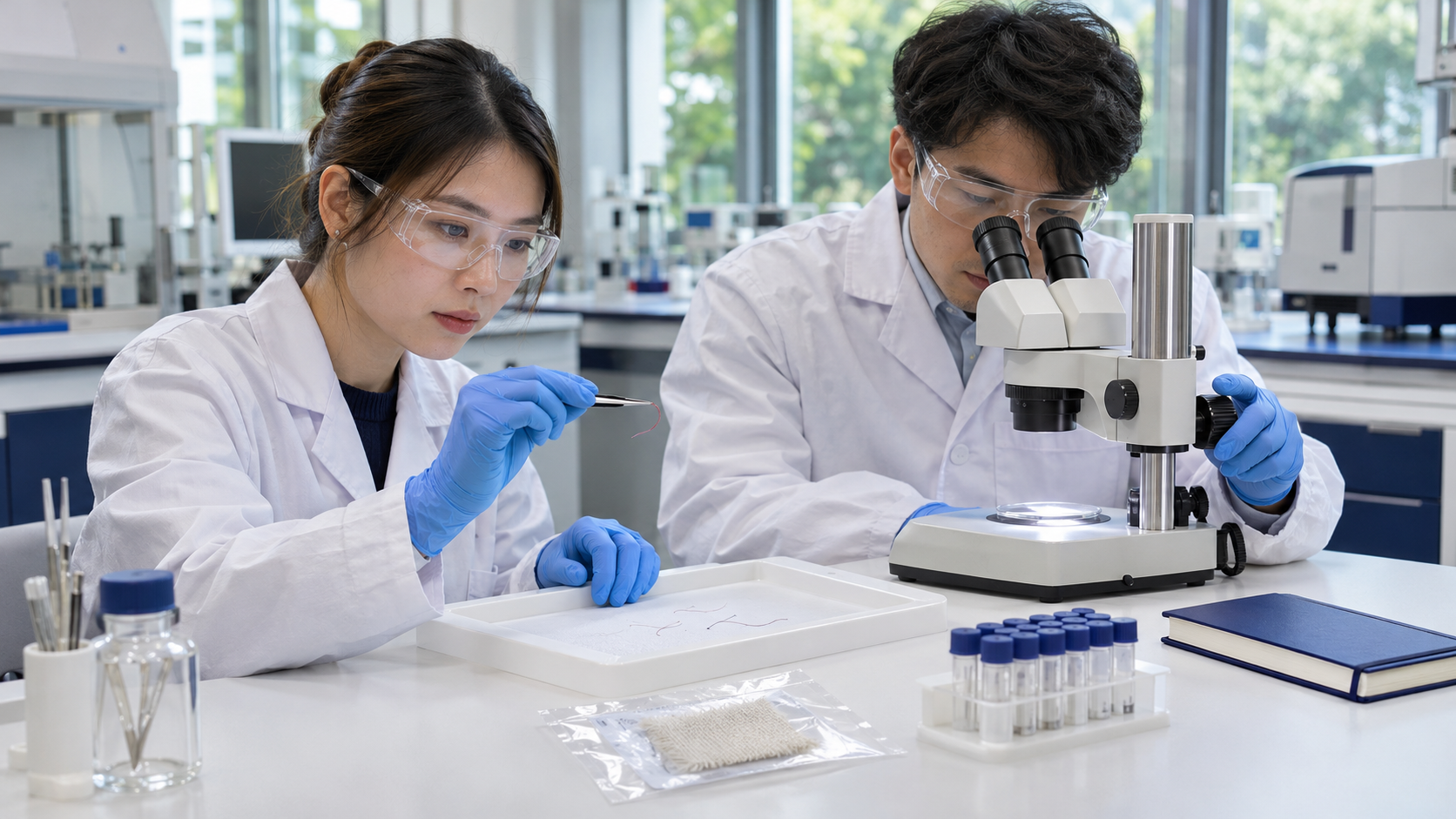
Depending on their specialism, forensic scientists may examine biological samples, fibres, glass, paint, chemical substances or other materials. They use techniques such as microscopy, chemical analysis and DNA profiling to investigate the nature of a sample and assess its possible significance within the circumstances of a case.
Reliable evidence handling is central to the field. Students learn about documenting, collecting, packaging and storing evidence, preventing contamination and maintaining a clear record of who has handled each item. This documented history, often called the chain of custody, helps demonstrate the integrity and traceability of evidence.
Forensic work also involves evaluating what scientific results can and cannot establish. Scientists consider alternative explanations, the limitations of their methods and uncertainty in their findings. Their role is to provide impartial scientific evidence rather than decide whether a person is guilty or innocent.
Clear communication is another important part of forensic science. Practitioners prepare accurate laboratory records and reports, explain technical findings to people without scientific training and, where required, give expert evidence in court. Attention to detail, ethical judgement and quality assurance underpin this work.
Studying forensic science develops practical laboratory, analytical and problem-solving skills that can support careers in forensic services and other scientific industries. Courses vary in their balance of laboratory analysis and crime scene investigation, so students should compare their content carefully. A forensic science degree does not by itself qualify a graduate as a police officer, forensic psychologist or forensic pathologist; these careers have separate entry and training requirements.
What Will You Study?
Forensic Chemistry & Analysis
Build a foundation in chemistry and learn how scientific techniques are used to examine substances and trace materials. Explore methods such as microscopy, chromatography and spectroscopy, developing skills in sample preparation, measurement and interpreting analytical results.
Forensic Biology & DNA
Study biological evidence, genetics and the principles of DNA profiling. Learn about identifying and analysing biological samples, controlling contamination and considering the significance and limitations of findings within the circumstances of a case.
Crime Scene & Evidence Handling
Explore how potential evidence is recognised, documented, recovered and preserved. Practical activities may include photography, packaging and maintaining chain-of-custody records, with attention to contamination prevention, safety and accurate documentation.
Evidence Interpretation & Reporting
Develop skills in analysing data, evaluating alternative explanations and communicating scientific findings. Explore uncertainty, quality assurance and professional ethics, alongside report writing and the presentation of evidence through case studies or simulated court activities.
These are typical study areas. The balance of chemistry, biology, crime scene work, specialist topics and practical opportunities varies by university and programme.
Entry Requirements & Study Pathways
Your pathway into forensic science depends on your academic qualifications, science background and the requirements of your chosen university. Compare each programme’s balance of chemistry, biology, laboratory analysis and crime scene investigation alongside its entry requirements.
| Your Qualification | Possible Study Pathway |
|---|---|
| Singapore O Levels | Further study through A Levels, the IB Diploma or a suitable foundation or diploma programme may help you meet undergraduate entry requirements. Confirm that your chosen pathway is accepted for the intended forensic science degree and includes any required science and mathematics subjects. |
| Singapore A Levels / IB Diploma | You may be eligible for direct entry into an undergraduate forensic science programme, depending on your grades and subject combination. Check whether chemistry, biology, mathematics or other science subjects are required, particularly for courses with a strong laboratory focus. |
| Polytechnic Diploma | Your application will be assessed against the university’s requirements, including your diploma discipline, GPA and relevant modules. Provide details of chemistry, biology, analytical science or laboratory studies where relevant. Any credit transfer or advanced entry is assessed separately and is not automatic. |
| Bachelor’s Degree | If you are considering postgraduate forensic science study, check which previous degrees and prerequisite subjects the programme accepts. Eligibility may depend on your academic results, scientific background and relevant experience. Compare the available specialisms and whether the course is intended for new entrants, researchers or existing practitioners. |
Additional Admission Requirements
Depending on the university and programme, you may need specific science subjects, evidence of English language proficiency, a personal statement or references. Postgraduate applications may also require module descriptions, relevant experience or a research proposal. Check separately whether any placement has additional eligibility, background-check or security requirements.
Featured Universities
Explore forensic science programmes at selected universities in the UK and Australia. Compare scientific specialisms, laboratory training and practical learning opportunities to find an option that suits your interests and career goals.
United Kingdom

Teesside University
BSc (Hons) Forensic Science
Develop scientific knowledge and practical skills for examining forensic evidence. Study on a multidisciplinary course accredited by the Chartered Society of Forensic Sciences.
Northumbria University
BSc (Hons) Forensic Science
Build forensic science knowledge through scientific study and practical laboratory learning. Explore evidence analysis and develop transferable skills relevant to forensic and analytical science settings.
Australia

Deakin University
Bachelor of Forensic Science
Explore forensic science from simulated crime scenes to laboratory analysis and courtroom presentations. The degree is professionally accredited by the Chartered Society of Forensic Sciences.
Murdoch University
Bachelor of Forensic Science
Explore forensic biology or forensic chemistry and toxicology. Develop scientific understanding and practical skills relevant to analysing biological, chemical and toxicological evidence.
Need Help Choosing Your Programme?
Contact UniGlobal to compare forensic science programmes based on your qualifications, scientific interests and career goals.
Explore My Study Options →Working in Singapore

If you plan to work in forensic science in Singapore, compare your chosen programme with the scientific knowledge, laboratory skills and eligibility requirements of the roles you hope to pursue.
Qualifications & Employment Requirements
Forensic science employment is assessed against the requirements of individual positions. A degree’s title alone does not establish suitability: employers may consider your scientific specialism, relevant modules, laboratory experience and ability to analyse and communicate findings.
In Singapore, the Health Sciences Authority (HSA) provides forensic and analytical services that support investigations and the administration of justice. Its work includes forensic DNA analysis, chemistry and trace evidence examination, analytical toxicology and illicit drug analysis.
When comparing courses, look closely at the depth of chemistry, molecular biology, genetics or other relevant sciences for your intended specialism. Practical laboratory training, research projects, statistics, quality assurance and scientific report writing can help you develop relevant skills.
Check each vacancy for its academic, experience and recruitment requirements. Where a role specifies citizenship, residency, background checks or security clearance, confirm your eligibility directly with the recruiting organisation. University admission does not establish eligibility for employment or placements.
Professional course accreditation can help you assess a programme’s training standards, but it does not guarantee acceptance by a Singapore employer. Forensic laboratory roles, crime scene roles and uniformed police careers have different recruitment and training routes.
A forensic science degree does not qualify a graduate to practise as a forensic pathologist or forensic psychologist. These professions require separate education and training. Review current vacancies and official career information before deciding which course best supports your goals.
Career Opportunities
Forensic science graduates can explore laboratory, investigative support and wider analytical science roles. Opportunities depend on your scientific specialism, practical experience and the recruitment requirements of individual employers.
Forensic Biology & DNA Analysis
Examine biological evidence and support DNA analysis within specialist laboratories. Work may include sample preparation, testing, interpreting results and maintaining accurate records, with additional training required for particular methods and responsibilities.
Forensic Chemistry & Trace Evidence
Use analytical techniques to examine materials such as fibres, glass, paint and chemical residues. Help identify and compare samples, evaluate findings and prepare scientific documentation that supports investigations.
Toxicology & Drug Analysis
Analyse samples for drugs, poisons or other chemical substances in specialist testing environments. Roles may involve instrumental analysis, method development and evaluating results, supported by relevant chemistry or toxicology knowledge.
Crime Scene & Evidence Support
Support the documentation, recovery, packaging and tracking of evidence. Crime scene positions have their own recruitment and practical training requirements, which may include background checks, security clearance or other eligibility conditions.
Analytical Testing & Quality
Apply laboratory skills in sectors such as pharmaceuticals, environmental testing and manufacturing. Depending on your scientific training, work may include testing samples, checking results against specifications and supporting laboratory quality systems.
Research & Method Development
Contribute to studies that improve evidence detection, analytical methods and interpretation. Research roles may involve designing experiments, analysing data and validating techniques, with postgraduate qualifications required for some positions.
These are examples of career directions rather than guaranteed outcomes. Some roles require additional training, experience or postgraduate study. Citizenship, residency and security requirements may apply. Police, forensic pathology and forensic psychology careers have separate entry and training routes.
Let’s plan your next step
Tell us about your qualifications and forensic science study goals.
Enquire about studying forensic science →
Entry requirements and available pathways vary by institution and course.